
From Reflection to Clarity: How to Turn Your Insights Into a Differentiated Brand
From Reflection to Clarity: How to Turn Your Insights Into a Differentiated Brand
In December, I invited you to slow down.
To step out of execution mode and give yourself the space to listen more closely to what your brand was really trying to say.
Not to rush toward answers.
Not to force a strategy.
In my last article, I shared 10 writing prompts to help you uncover the deeper layers of meaning, value, and intention beneath the surface.
Now that January is here, the question naturally becomes:
What do we do with what surfaced?
This is where reflection turns into clarity — and clarity turns into a brand that is articulated simply, confidently, and consistently.
- From Frustration to Purpose: Articulating Why Your Brand Exists
Every strong brand begins with a tension.
Something in the industry that doesn’t sit right.
A status quo that feels outdated, harmful, or misaligned.
A frustration that keeps coming back — no matter how much experience you gain.
Patagonia’s frustration is the belief that business exists solely to maximise profit.
Dove’s frustration is how beauty has been distorted by unrealistic standards, amplified by retouching and AI.
My own frustration, when I set up my business, was how marketing is often used to manipulate us into consumption rather than create genuine value and impact.
That’s why the first step is not to ask what you do, but why your brand exists in the first place. What’s that frustration you are looking to overcome? The status quo you are looking to challenge?
Here’s a simple framework to help you articulate that purpose, using the insights from your December writing prompts:
In a world where…
(insert your biggest frustration with the industry — inspired by prompts 1–3)
we exist to…
(how your brand uniquely responds to that frustration — inspired by prompts 4–7)
so that…
(insert the future or impact you want to contribute to — inspired by prompts 8–10)
This then becomes your purpose statement.
It doesn’t need to be perfect.
It may feel a little clunky – that’s ok!
And yes — you can absolutely play with it, refine it, and even use AI to help you explore different wordings.
What matters is that it feels true.
Here are a couple of examples using this framework to inspire you:
- Patagonia: In a world where business treats nature as a free, unlimited resource and the only measure of success is profit, we exist to show there is another way, one where profit and purpose co-exist, so that we save our home planet.
- Dove: In a world where beauty standards are unattainable and impact mental health, we exist to change the standards of the beauty industry, so that you both look and feel your best.
- My own purpose statement: In a world obsessed with chasing capitalist success, we help brands rise above the status quo and claim their boldest truth — equipping them with the words, confidence, and strategy to grow with purpose and impact.
- Where Differentiation Really Lives: Your Competitive Advantage
Here’s something many brands miss:
Your differentiation doesn’t sit in the whole purpose statement.
It sits in the middle.
The “we exist to…” part.
This is the part competitors can’t simply copy or outspend.
It is where your competitive advantage lies — the space where your brand answers the industry frustration in a way that others simply don’t.
To make this actionable, I recommend listing everything that makes your brand truly unique and ownable.
Strong brands usually combine:
- Something tangible: A methodology.A technology.A design approach. A specific benefit or way of working.
And…
- Something emotional: A belief system. A culture. A way of seeing the world. A feeling your brand creates.
The emotional dimension is crucial — because it’s the part competitors can’t copy.
When Lidl copied Tony’s Chocolonely’s distinctive design asset, Tony’s pointed back to its emotional competitive advantage: the sourcing principles and mission behind it, responding with a creative campaign that essentially said: “you’re missing the best part.”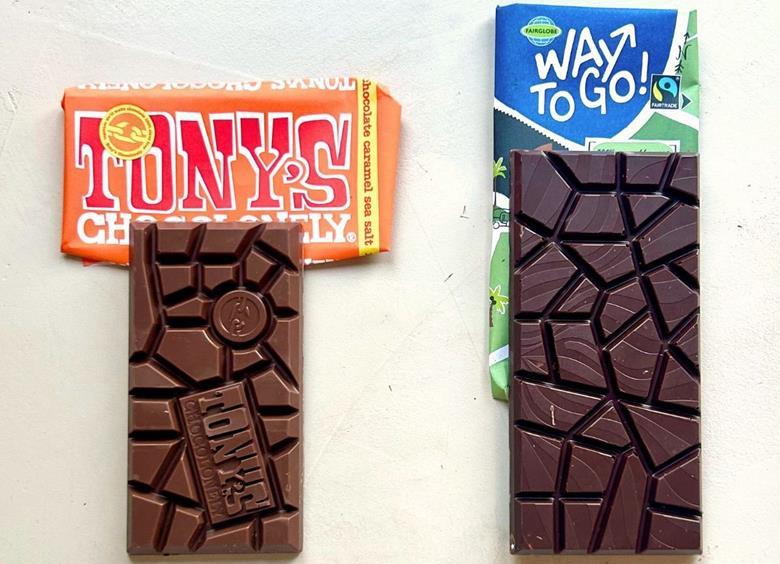
When both tangible and emotional competitive advantages come together, your differentiation starts connecting with those who share your values and beliefs.
- From Purpose to Messaging: Bringing Your Brand to Life
Purpose gives you clarity.
Differentiation gives you focus.
But messaging is where your brand truly comes to life. This is what your customers will see and relate to.
Messaging is not about repeating your purpose statement word for word (and that’s why it’s ok for your purpose statement to feel a bit long or clunky!).
Your messaging is about creatively translating your purpose into something people can feel, remember, and rally behind.
Two powerful examples illustrate this beautifully:
Dove’s purpose can be articulated as:
“In a world where beauty standards are unattainable and impact mental health,
we exist to change the standards of the beauty industry,
so that you both look and feel your best.”
They translated this purpose into the campaign tagline “Let’s Change Beauty.”
That simple idea became the foundation of Dove’s Real Beauty campaign — a campaign that has evolved over the past 20 years to address the biggest social challenges caused by the beauty industry.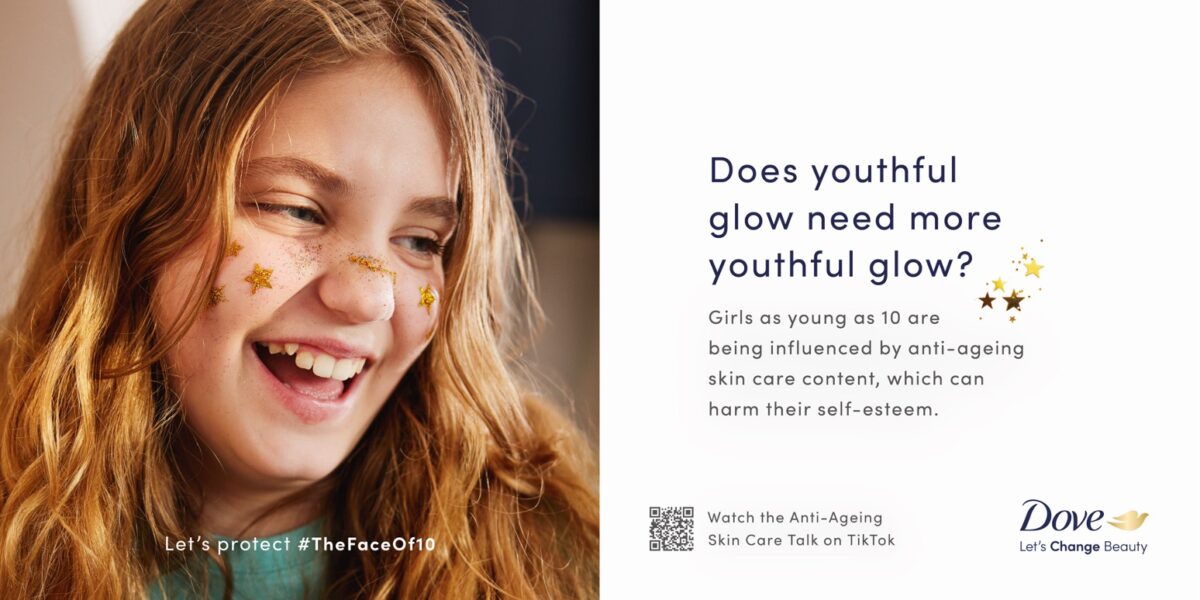
Tony’s Chocolonely’s purpose can be articulated as:
“In a world where over 2 million children still work illegally on cocoa plantations,
we exist to show that chocolate can be made differently,
so that all chocolate is 100% slave-free.”
They translated this purpose in to the messaging platform “Together, we’ll end exploitation in cocoa.”
This message shows up everywhere — even in the uneven chocolate bars, which physically represent inequality in the cocoa industry. And as we saw earlier, even if a competitor copies one of the brand’s distinctive assets, its unique purpose cannot be replicated.
What This Means for You
Your December reflections weren’t an end in themselves.
They were the raw material, the diamond in the rough that now needs to be polished to shine in its full uniqueness.
In January, the work becomes:
- Shaping those reflections into a clear purpose
- Identifying what truly sets your brand apart
- And translating that clarity into a message that guides everything you do
This isn’t about being louder.
But about deeper clarity that leads to truer expression and becomes the foundation for your positioning, your narrative, and the way your brand shows up in the world.
And that’s when the overexplaining finally disappears and people instantly click with what you’re communicating.
If you’d like support walking through this process — from reflection to purpose, differentiation, and messaging — my January 1:1 Brand Clarity Sessions are designed exactly for this stage.
You can find out more here, or simply reach out at: [email protected]
But whether you do this work alone or with support, remember this:
The most powerful brands don’t invent meaning.
They uncover it — and then have the courage to stand behind it.
Wishing you a successful and impactful year ahead! ✨

